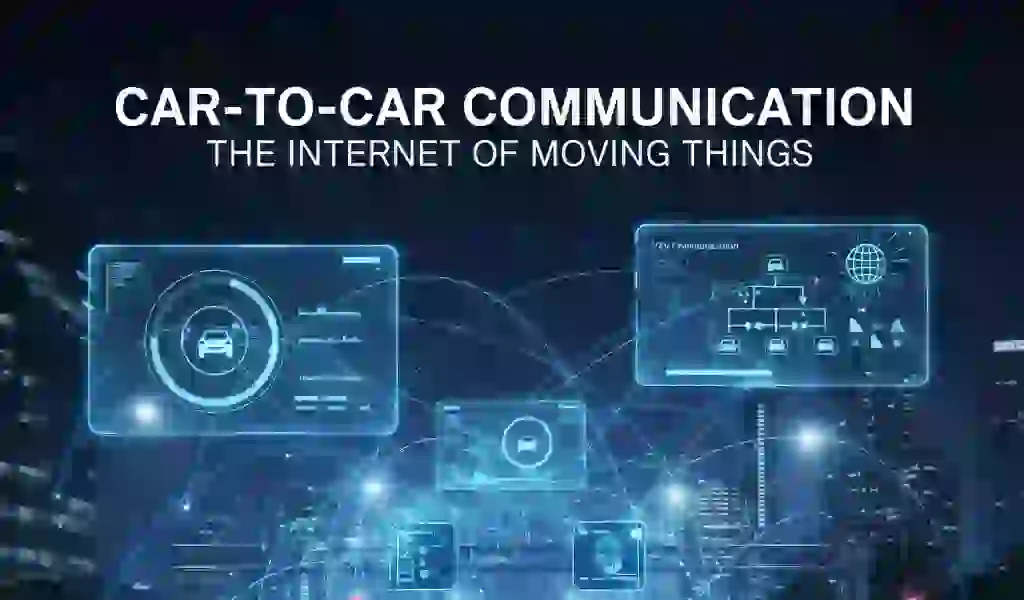
Introduction to Car-to-Car Communication
Car-to-car communication, a pivotal component of the Internet of Moving Things, represents an innovative approach to enhancing the automotive landscape. This technology enables vehicles to exchange information seamlessly, which is crucial in the context of smart transportation systems. By leveraging dedicated short-range communications (DSRC) and cellular networks, vehicles can transmit vital data such as speed, location, and intended maneuvers. This information can be crucial in improving overall road safety, reducing traffic congestion, and optimizing travel times.
The importance of car-to-car communication becomes evident when considering the increasing complexity of modern road networks. With the number of vehicles on the road steadily rising, it is essential for automotive technology to evolve alongside it. The fundamental principles of this technology revolve around the real-time sharing of information among vehicles, which aids in anticipating and mitigating potential hazards. For instance, vehicles equipped with communication capabilities can alert drivers about upcoming obstacles, emergency braking in vehicles ahead, or sudden lane changes, significantly enhancing safety on the roads.
Moreover, the benefits of connecting vehicles extend beyond safety concerns. Enhanced driving experiences can be realized through features such as coordinated traffic flow, which minimizes idling and reduces fuel consumption. By facilitating a more efficient automotive ecosystem, car-to-car communication can contribute to environmental sustainability goals. Furthermore, connected vehicles can support the development of autonomous driving technology, which relies heavily on accurate data from surrounding vehicles to operate safely and effectively.
As the automotive industry continues to innovate, the integration of car-to-car communication represents a monumental shift towards smarter, safer, and more efficient transportation systems. The potential for this technology to transform our daily commutes and overall transportation infrastructure is significant, paving the way for the future of connected vehicles and smarter automotive solutions.
The Technology Behind Car-to-Car Communication
The automotive industry has witnessed significant advancements in communication technologies, particularly in the realm of car-to-car communication. This includes two primary frameworks: Vehicle-to-Vehicle (V2V) and Vehicle-to-Everything (V2X) communication. Together, they are foundational to the developing ecosystem of connected vehicles that promise improved safety and efficiency on the roads.
V2V communication allows vehicles to exchange real-time information directly with each other. This technology utilizes two main communication protocols: Dedicated Short-Range Communications (DSRC) and cellular-based systems, including the emergent 5G network. DSRC is designed for low-latency, high-speed data transfer over short distances, typically ranging from a few hundred meters. It operates in the 5.9 GHz band and offers robust performance in various environmental conditions, enabling vehicles to share critical data such as speed, direction, and braking status, enhancing situational awareness and collision avoidance.
On the other hand, V2X communication expands this concept beyond mere vehicle interactions to encompass communications with infrastructure and pedestrians. As vehicles become immersed in a multilayered communication network, the reliance on cellular technologies, particularly 5G, becomes paramount. The high bandwidth and low latency of 5G connections enable more comprehensive data sharing capabilities, allowing for real-time updates about traffic conditions, hazards, or roadwork, which can significantly enhance the driving experience.
In addition, these communication protocols must be secure to ensure the integrity of the data exchanged among vehicles. Consequently, the incorporation of advanced encryption techniques within these frameworks becomes critical in safeguarding against potential cyber threats. As the automotive sector embraces these innovative communication technologies, the groundwork laid by V2V and V2X systems paves the way for a new era of smart transportation.
Safety Enhancements through Car Communication
The implementation of car-to-car communication technology stands to revolutionize road safety by enabling vehicles to share vital information instantaneously. This connectivity allows for the integration of advanced collision avoidance systems that can actively prevent accidents. When vehicles are equipped with communication technologies, they can relay their speed, direction, and braking status, facilitating real-time decision-making. For instance, if one vehicle detects rapid deceleration ahead, it can alert following vehicles to slow down before the driver even perceives the danger, effectively reducing the likelihood of rear-end collisions.
Moreover, hazard warnings significantly enhance safety through timely notifications about unexpected situations on the road. For instance, if a vehicle encounters a slippery patch due to weather conditions or an accident ahead, it can broadcast this information to nearby cars, allowing drivers to adjust their speeds accordingly. Statistics suggest that regions implementing such car communication systems have experienced a marked decline in collision rates. A study conducted in a metropolitan area showed that collision rates dropped by approximately 30% after the deployment of connected vehicle technologies, affirming the potential of automotive communication to save lives.
Another essential feature facilitated by car-to-car communication is the provision of real-time traffic updates. This technological advancement helps vehicles navigate congestion and adapt their routes accordingly, minimizing travel times and reducing the chances of accidents caused by sudden stops or merges. By enhancing situational awareness, such communication fosters a safer driving environment, not just for the vehicle occupants but for all road users. Through continuous improvements in automotive communication systems, the future of road safety appears increasingly promising, potentially reducing fatalities and injuries on roads significantly.
Impact on Traffic Management and Efficiency
Car-to-car communication represents a transformative advancement in the field of automotive technology, particularly in its potential to reshape traffic management and improve efficiency on our roadways. By enabling vehicles to share real-time information regarding traffic conditions, road works, and accidents, this innovative communication framework stands to enhance overall traffic flow significantly. The integration of such communication systems into urban environments forms a critical component of smart city initiatives aimed at addressing persistent transportation challenges.
For instance, in cities where car-to-car communication has been implemented, vehicles can alert each other about changes in traffic conditions, such as sudden slowdowns or obstacles ahead. This collective intelligence allows drivers to make informed decisions, rerouting themselves to avoid congested areas and thereby contributing to a more fluid traffic ecosystem. As vehicles relay this crucial information, traffic management systems can also adapt in real time, optimizing signal timings and decreasing overall congestion. This dynamic response significantly shortens travel times, aiding in the efficient movement of not just private vehicles but also public transportation and emergency services.
Several pilot projects worldwide highlight the positive implications of car-to-car communication on traffic management. For example, trials conducted in urban centers have illustrated reductions in congestion levels and travel times, providing compelling evidence of the benefits tied to the exchange of data among vehicles. Moreover, as municipalities continue to invest in the integration of automotive technology with existing infrastructure, the potential for enhanced traffic efficiency becomes increasingly achievable.
Ultimately, by fostering an environment where vehicles communicate and collaborate, cities can realize a future marked by reduced traffic congestion and improved safety. This progression aligns with broader ambitions of creating sustainable urban transport solutions, enhancing both the efficiency of journeys and the overall quality of life for residents.
Privacy and Security Concerns
The advent of car-to-car communication, a vital component of the automotive ecosystem, presents numerous advantages in enhancing safety and efficiency on roadways. However, it concurrently introduces significant privacy and security challenges that must be addressed. As vehicles become increasingly interconnected, the risk of cyber threats escalates. Unauthorized access to vehicle information can lead to data breaches, putting sensitive driver and passenger information at risk.
One major concern is the potential for hacking. Malicious actors could exploit vulnerabilities in the communication protocols designed for automotive systems, gaining control over vehicles and potentially jeopardizing the safety of drivers and passengers. This underscores the necessity for a fortified cybersecurity framework that encompasses encryption, authentication, and advanced security measures. Proper implementation of robust security protocols is crucial to ensure that the data transmitted between vehicles remains secure and private.
Additionally, there are significant implications regarding the collection and handling of data generated through car-to-car interactions. The transmission of information related to location, speed, and driving behavior raises questions about user consent and data ownership. Without stringent regulations in place, there is a risk that such information may be misused, leading to invasions of privacy and the potential for organizations to market directly to individuals based on their driving habits.
Consequently, the importance of establishing comprehensive regulatory frameworks cannot be overstated. Policymakers must work collaboratively with automotive manufacturers, cybersecurity experts, and industry stakeholders to create guidelines that prioritize consumer protection while fostering innovation. By focusing on implementing strong privacy policies and security measures, the automotive industry can mitigate these risks, ultimately ensuring a secure environment for car-to-car communication.
Integration with Autonomous Vehicles
The evolution of automotive technology has ushered in an era where car-to-car communication (C2C) plays a pivotal role in the development of autonomous vehicles. This integration allows vehicles to exchange vital data in real-time, enhancing their ability to make informed decisions and navigate increasingly complex environments. For instance, autonomous vehicles equipped with C2C technology can receive information from other vehicles regarding traffic conditions, hazards, or unexpected obstacles, thereby allowing them to adjust their driving behavior accordingly.
A significant benefit of this communication system is its potential to improve road safety. Autonomous vehicles can effectively detect and respond to the actions of nearby vehicles or road users. By leveraging data shared through C2C channels, these vehicles can predict the movement of other vehicles, cyclists, and pedestrians, reducing the likelihood of accidents. This capability is particularly critical in urban settings where confusion and unpredictability are prevalent due to the high density of road users.
Moreover, the integration of C2C communication enhances the efficiency of transportation networks. Autonomous vehicles can optimize their routes based on real-time traffic data shared by other cars, leading to reduced congestion and shorter travel times. This not only creates a more efficient automotive landscape but also contributes to environmental sustainability by lowering emissions through decreased idle time in traffic.
In terms of technological implementation, the successful integration of C2C communication in autonomous vehicles requires sophisticated algorithms and robust data processing capabilities. These systems must be designed to ensure seamless connectivity while maintaining cybersecurity measures to protect vehicles from potential threats. As automotive technology continues to advance, the synergy between car-to-car communication and autonomous vehicle development will play a crucial role in shaping the future of transportation.
Future Trends in Car-to-Car Communication
The progression of car-to-car communication is poised to revolutionize the automotive landscape profoundly. As we look to the future, the integration of advanced technologies such as artificial intelligence (AI), machine learning, and edge computing will play pivotal roles. These innovations are expected to enhance the efficiency and reliability of data exchange between vehicles, leading to improved safety, traffic management, and overall driving experiences.
AI algorithms will facilitate real-time analysis of vast amounts of data generated by connected vehicles, allowing them to make informed decisions swiftly. For instance, AI can predict potential hazards by evaluating traffic patterns and driver behavior, sending alerts to nearby vehicles. Simultaneously, machine learning will enable systems to adapt and evolve based on historical data, refining their communication strategies to optimize road safety and efficiency continually. The marriage of these technologies in automotive applications will undoubtedly reshape how vehicles interact with each other and their environment.
Furthermore, the development of edge computing is set to reduce latency in communication. With cars capable of processing information locally rather than relying on distant cloud servers, data can be transmitted and acted upon almost instantaneously. This immediacy is crucial for time-sensitive situations, such as avoiding collisions or coordinating movements within crowded traffic scenarios.
As these technologies advance, the need for global standards and regulations will become more pressing. A unified approach to communication protocols will ensure compatibility between different manufacturers and systems, fostering an ecosystem where vehicles can seamlessly exchange information. Ultimately, the future of automotive car-to-car communication holds great promise, with innovations paving the way for safer, smarter, and more efficient transportation networks.
Real-World Applications and Case Studies
Car-to-car communication (C2C) has seen significant advancements in recent years, leading to various real-world applications that highlight its transformative potential in the automotive industry. One notable example is the deployment of Vehicle-to-Vehicle (V2V) technology in the United States. This initiative, led by the Department of Transportation, aims to enhance traffic safety by enabling vehicles to exchange information about road conditions, hazards, and other crucial data. In a case study conducted in Ann Arbor, Michigan, over 3,000 vehicles were equipped with dedicated short-range communications (DSRC) technology, fostering an environment that allowed for real-time data sharing among cars. This pilot program yielded promising results, showing a notable reduction in collision rates and a significant improvement in traffic flow.
In Europe, the European Union has been working on the Cooperative Intelligent Transport Systems (C-ITS) project, which integrates C2C and Car-to-Infrastructure (C2I) communication systems. As part of this initiative, cities like Amsterdam and Hamburg have implemented C2C communication to decrease traffic congestion and improve public transport efficiency. By allowing vehicles to communicate with one another and with traffic signals, these cities have seen a reduction in wait times at intersections, which ultimately leads to lower emissions and reduced travel times.
China is also making strides in automotive innovation with its implementation of the Internet of Vehicles (IoV) concept. The country has partnered with numerous automotive manufacturers to develop a nationwide V2V communication network that informs drivers about traffic jams and emergencies in real time. These partnerships have demonstrated significant benefits, including enhanced road safety and more efficient navigation systems.
These real-world applications and case studies illustrate the practicality and benefits of car-to-car communication technologies. As the automotive landscape continues to evolve, the implementation of C2C systems is expected to play a crucial role in shaping the future of transportation globally, ensuring safer and more efficient travel experiences for all road users.
Conclusion: The Road Ahead
As we traverse the ever-evolving landscape of the automotive industry, it becomes increasingly clear that car-to-car communication holds revolutionary potential. This technology, often referred to as Vehicle-to-Vehicle (V2V) communication, is set to redefine the way vehicles interact with each other and their environment. Throughout this discussion, we have explored the various dimensions of this innovation, including its capabilities to enhance safety, improve traffic flow, and ultimately create smarter and more connected transportation systems.
One of the most notable advantages of car-to-car communication is its ability to facilitate instantaneous information exchange between vehicles. This enables them to share critical data regarding speed, direction, and potential hazards, effectively reducing the likelihood of collisions and accidents. The implications of such advancements extend beyond mere safety; they present opportunities for optimizing traffic management, reducing congestion, and enhancing the overall efficiency of urban transportation ecosystems.
Moreover, the integration of car-to-car communication with emerging technologies like artificial intelligence and machine learning amplifies its benefits. This synergy could lead to more autonomous driving experiences, where vehicles can anticipate movements and adjustments in real-time, fundamentally changing our approach to travel. Such innovations highlight the importance of collaboration among stakeholders in the automotive sector, ranging from manufacturers to policymakers, as well as consumers themselves.
As we look toward the future of mobility, it is essential for each of us to consider our role in supporting these advancements. By advocating for the adoption of car-to-car communication technologies and fostering discussions around regulatory frameworks, we can contribute to a safer and more intelligent transportation landscape. Indeed, the journey ahead holds promise, and together, we can pave the way for a transformative automotive future.
