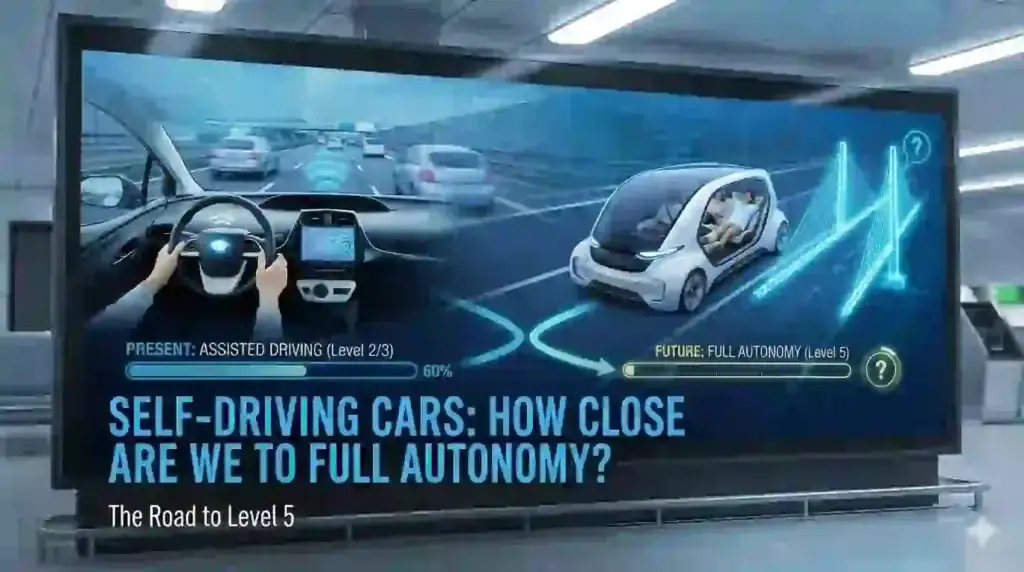
Introduction to Self-Driving Cars
Self-driving cars, also known as autonomous vehicles, represent a transformative development in the automotive industry, fundamentally altering our conception of transportation. These vehicles are equipped with advanced technologies designed to navigate and operate without direct human intervention. Ranging from basic driver assistance systems to fully autonomous capabilities, self-driving cars embody various levels of vehicle autonomy as outlined by the Society of Automotive Engineers (SAE). The levels of autonomy span from Level 0, where human drivers retain complete control, to Level 5, where the machine handles all driving tasks in any condition, allowing passengers to engage freely without attention to driving.
The underlying technology integrated into self-driving cars encompasses a combination of sensors, cameras, radar, and sophisticated software. These components work collaboratively to gather data about the surrounding environment, enabling the vehicle to make informed decisions in real time. Machine learning and artificial intelligence enhance these systems, allowing vehicles to recognize patterns, adapt to new situations, and learn from previous experiences. As such, the automotive industry continually innovates, focusing on refining these technologies to improve safety, efficiency, and performance.
The significance of self-driving cars within modern transportation extends beyond mere convenience; they offer the potential to reshape our mobility landscape. By reducing traffic congestion, minimizing accidents caused by human error, and providing greater mobility to non-drivers, self-driving cars could revolutionize how society approaches transport. Furthermore, as automotive manufacturers, tech companies, and governmental organizations collaborate, the implications of these innovations will likely manifest in improved infrastructures and urban planning strategies aimed at accommodating an autonomous future. This shift opens up discussions about regulatory frameworks, ethical considerations, and the overall impact on economies and employment, making it a subject of critical importance in today’s automotive discourse.
Levels of Autonomy Explained
The development of self-driving cars has given rise to a structured classification system established by the Society of Automotive Engineers (SAE), known as the J3016 standard. This standard delineates six distinct levels of driving automation, ranging from Level 0 to Level 5. Understanding these levels is critical to comprehend where the automotive industry currently stands in the pursuit of fully autonomous vehicles.
At Level 0, there is no automation; the driver is entirely responsible for vehicle control. Most conventional vehicles fall into this category, providing only basic safety features such as anti-lock brakes or traction control. As we progress to Level 1, also known as driver assistance, features like adaptive cruise control or lane-keeping assistance are available. Here, the vehicle can assist the driver, but total responsibility remains with the human operator.
Level 2 introduces partial automation. In this scenario, the vehicle is equipped with advanced driver-assistance systems (ADAS) that can control both steering and acceleration/deceleration simultaneously under certain conditions. However, the driver must still monitor the environment and be ready to take over at any moment. Transitioning to Level 3 offers conditional automation, where the vehicle can manage most driving tasks independently, yet the driver must remain vigilant and prepared to intervene when requested.
Level 4 signifies high automation, allowing vehicles to perform all driving tasks within specific scenarios or conditions, such as urban environments or highway driving without human intervention. Finally, at Level 5, we achieve full automation, where the vehicle can operate in any environment and conditions, eliminating the need for human input altogether. This progression in the levels of automation illustrates the evolving capabilities of automotive technology and sets the stage for future developments toward fully autonomous vehicles.
Current State of Self-Driving Technology
The landscape of self-driving technology has witnessed remarkable advancements as of 2023, reflecting the automotive industry’s progressive journey towards enhanced autonomy. Key players such as Waymo, Tesla, and Cruise have spearheaded innovations, establishing themselves as front-runners in the field. Each company has developed distinct approaches to automation, with Waymo focusing on ride-hailing services and Tesla promoting its Full Self-Driving (FSD) capabilities integrated within consumer vehicles. Moreover, large tech companies like Apple and Google have also started entering this highly competitive domain, further enriching the automotive landscape.
Central to these advancements is the utilization of artificial intelligence (AI) and machine learning, which are essential for processing vast amounts of data generated by the vehicles’ operational environments. As vehicles navigate complex scenarios, these technologies enable real-time decision-making based on inputs from various sensors such as LIDAR, cameras, and radar. These sensors work collaboratively to create a comprehensive picture of road conditions, obstacles, and potential hazards, ensuring safe navigation in diverse driving contexts.
With the increasing sophistication of data processing techniques, the capabilities of self-driving systems continue to improve. High-definition mapping combined with AI algorithms allow vehicles to not only recognize their surroundings but also anticipate and respond to myriad driving challenges. Furthermore, advanced vehicle-to-everything (V2X) communication is paving the way for a future where vehicles can interact with infrastructure, other vehicles, and even pedestrians. This integrated approach promises to enhance safety and efficiency in the automotive sector, ultimately steering us closer to realizing full autonomy.
As we move forward, the collaboration between automotive manufacturers and technology innovators remains crucial in pushing the boundaries of self-driving systems. Continuous research and development will be pivotal in overcoming existing challenges, ensuring that self-driving cars become a reliable aspect of everyday transportation.
Regulatory and Legal Challenges
The integration of self-driving cars into the automotive landscape introduces complex regulatory and legal challenges that must be navigated for their successful deployment. As autonomous vehicles (AVs) become more prevalent, manufacturers face significant hurdles in ensuring compliance with existing traffic laws. Current legislation was formulated with human drivers in mind, making it inadequate for addressing the nuances associated with AV operations. This discrepancy necessitates an examination and potential overhaul of regulations governing vehicle operation to accommodate the unique characteristics of these technologies.
One of the primary concerns lies in liability issues. In traditional automotive scenarios, liability typically falls upon the driver in the event of an accident. However, the introduction of autonomous vehicles raises questions about whether liability should shift to the manufacturer, software developer, or some other party, thereby complicating the legal landscape. Manufacturers must prepare for the possibility of being held accountable for software malfunctions or unforeseen AV behavior, which further complicates the rollout of autonomous technologies.
Moreover, there is a pressing need for new legislation that addresses not only liability but also safety and ethical considerations. Governments worldwide are grappling with the task of drafting laws that can address the rapid advancements in automotive technology while ensuring public safety. This may involve creating guidelines for testing AVs on public roads, establishing criteria for performance and safety that align with human driver standards, and serving to enhance consumer confidence in these emerging technologies.
Ultimately, the successful integration of self-driving vehicles into the broader automotive framework will depend on collaborative efforts between manufacturers, legislators, and regulatory bodies. Only by addressing these regulatory and legal challenges can we pave the way toward a future where fully autonomous vehicles operate safely and effectively in our societies.
Safety Concerns and Public Perception
The advent of self-driving cars has ignited considerable debate surrounding their safety and the public’s perception of this emerging technology. While proponents argue that autonomous vehicles have the potential to significantly reduce accidents caused by human error, critics remain skeptical about their reliability. Statistics reveal that there have been incidents involving autonomous vehicles, raising concerns about their ability to navigate unexpected situations. For instance, reports from organizations monitoring automotive accidents indicate fluctuations in collision rates associated with self-driving car tests. Such data fuel public apprehension regarding the safety of these vehicles.
One of the primary fears among consumers is the possibility of technology malfunctions. Many individuals are uneasy entrusting their safety to machines that rely on complex algorithms and sensors. High-profile accidents involving autonomous vehicles have received extensive media coverage, further amplifying public concerns. As a result, despite the potential benefits of reduced roadway fatalities, consumer acceptance of self-driving technology remains hesitant. Surveys indicate that a significant portion of the population harbors doubts about the operational safety of autonomous vehicles, often citing their fear of malfunction during critical driving situations.
Addressing these safety concerns is crucial for building trust in the automotive advancements of self-driving cars. Transparency is key; manufacturers must openly communicate the data and safety measures related to autonomous technology. Public education campaigns that illuminate how self-driving cars operate, their safety protocols, and the statistics supporting their efficacy can also aid in mitigating fears. By providing a clear understanding of the technology, stakeholders can foster a more positive public perception of self-driving vehicles. Ultimately, ensuring a safe and reliably operated fleet of autonomous vehicles will be fundamental in paving the way for consumer acceptance and widespread utilization.
Ethical Considerations in Autonomous Driving
The emergence of self-driving cars presents numerous ethical dilemmas that challenge both developers and society as a whole. One of the primary ethical concerns revolves around decision-making in accident scenarios. In a situation where an accident is unavoidable, how should an autonomous vehicle react? This involves complex calculations regarding the potential harm to passengers, pedestrians, and other road users. Various ethical frameworks, such as utilitarianism, suggest that the vehicle should act in a manner that maximizes overall happiness or minimizes harm. However, such decisions can be controversial, as they may require the prioritization of one life over another, raising significant moral questions.
Moreover, the prioritization of lives in accident scenarios can reflect societal values, which often differ across cultures. For instance, in some regions, the protection of human life takes precedence over property, while in others, the emphasis might be on the value of the vehicle and its occupants. This inconsistency could lead to a lack of uniformity in autonomous vehicle behavior and create confusion among users regarding safety and reliability. It is essential to establish a framework that not only addresses these ethical issues but also ensures transparency in how self-driving algorithms are developed and made public.
Another pressing ethical consideration involves data privacy. Autonomous vehicles generate vast amounts of data, including information about driving patterns, locations, and personal preferences. This data collection raises questions about ownership, consent, and security. There is a significant risk of misuse of such data, particularly if it falls into the wrong hands or is accessed without user consent. Society must balance the benefits of improved automotive safety and efficiency with the potential consequences of violating individual privacy rights.
As the automotive industry advances towards full autonomy, addressing these ethical dilemmas is crucial for building public trust and ensuring a responsible deployment of self-driving technology.
Roadmap to Full Autonomy
The journey towards full autonomy in self-driving cars has been a focal point for automotive experts and manufacturers alike. Predictions suggest that achieving fully autonomous vehicles (AVs) could take several more years, with a roadmap that involves gradual advancements in technology, regulation, and public acceptance. Experts generally agree that a phased approach, spanning from limited automation to full autonomy, will likely unfold over the next decade.
Currently, many vehicles on the road are equipped with Level 2 automation features, such as adaptive cruise control and lane-keeping assistance. Full automation, which is classified as Level 5, requires vehicles to operate without any human intervention under all conditions. The key milestones on this path include advancements in artificial intelligence, sensor technology, and safety protocols, which must be rigorously tested and validated.
By 2025, industry analysts forecast that numerous Level 4 automated vehicles, which can handle most driving conditions but may still require human oversight in complex scenarios, will be commercially available. These vehicles represent a significant step closer to full autonomy, relying heavily on sophisticated algorithms and real-time data processing. The ability of these automotive systems to navigate busy urban environments without human input is critical in establishing the groundwork for Level 5 systems.
Several factors could either accelerate or hinder this progress. For example, regulatory frameworks must evolve to accommodate the deployment of AVs, while public trust in these systems will need to be established. Challenges such as cybersecurity threats and ethical considerations surrounding decision-making in critical scenarios also play significant roles in determining how quickly full autonomy can be realized.
In summary, the timeline to full autonomy in self-driving cars hinges on technological advancements, regulatory developments, and societal acceptance. As these elements converge, we may witness more rapid progress towards a future where fully autonomous vehicles become an integral part of our transportation systems.
Impacts on Employment and the Economy
The advent of self-driving cars represents a significant turning point for the automotive industry and the economy at large. One of the most pressing concerns surrounding the rise of autonomous vehicles is the potential disruption to employment, particularly in driving-related jobs. With self-driving technology continuing to advance, sectors such as transportation, logistics, and delivery services may witness dramatic changes. According to estimates, millions of jobs in driving could be at risk as automated systems perform these tasks more efficiently and reliably than human drivers.
However, the transformation brought about by autonomous vehicles may yield both challenges and opportunities. While traditional roles, such as truck drivers and taxi operators, might decline, the emergence of self-driving technology will create new job prospects in fields such as vehicle maintenance, software development, and data analysis. The automotive industry will require skilled personnel to ensure these advanced systems function smoothly, thus generating demand for technical training and education.
Moreover, the impact of self-driving cars extends beyond employment. Industries reliant on vehicles, particularly insurance and logistics, are on the verge of transformation. As accidents decrease with the adoption of safer automotive technologies, the insurance paradigm will shift, potentially leading to lower premiums but fewer claims overall. Additionally, logistics companies can optimize their operations with autonomous fleets, improving efficiency and reducing operational costs—further contributing to economic growth.
Ultimately, while self-driving cars may pose a threat to traditional jobs, they also present an opportunity for innovation and job creation in new areas. Policymakers and industry leaders must proactively address workforce transitions, ensuring that those affected by the changes can adapt and thrive in a new economic landscape shaped by autonomous vehicles.
Conclusion and Future Outlook
The journey toward full autonomy in self-driving cars has prompted significant advancements in automotive technology, positioning it at the forefront of modern transportation solutions. As we have explored throughout this blog, the current state of self-driving technology reveals both remarkable progress and notable challenges. Leading manufacturers are heavily investing in research and development, conducting extensive tests to enhance the systems responsible for navigation, obstacle detection, and user safety.
Currently, several automotive companies have achieved varying levels of automation, specifically Level 2 and Level 3 autonomy, which allow for conditional automation under certain circumstances. However, achieving Level 5 autonomy, where vehicles will have the ability to perform all driving tasks in any environment without human intervention, remains a formidable challenge due to regulatory, ethical, and technical complexities. As sensor technologies improve and artificial intelligence algorithms become more sophisticated, the automotive industry is steadily moving closer to this goal.
For consumers, this transition will likely foster a new paradigm of mobility. Enhanced safety features and the potential for reduced traffic infractions are promising prospects. Furthermore, increased efficiency in both fuel consumption and time management could revolutionize the typical driving experience. Nevertheless, the path to autonomy is coupled with discussions regarding data privacy, infrastructure readiness, and public acceptance of self-driving technologies. To engage with these evolving technologies, consumers must stay informed about the intricacies of automation, including the iterative advancements being made over the coming years.
In conclusion, although full autonomy remains on the horizon, the automotive landscape is experiencing rapid progression. Stakeholders, including manufacturers, regulators, and the public, must collaborate to navigate the challenges ahead. Only through ongoing dialogue and innovation can we hope to realize the promise of truly autonomous vehicles in our daily lives.

